Architecture
One metadata router. Durable data servers. Direct paths between.
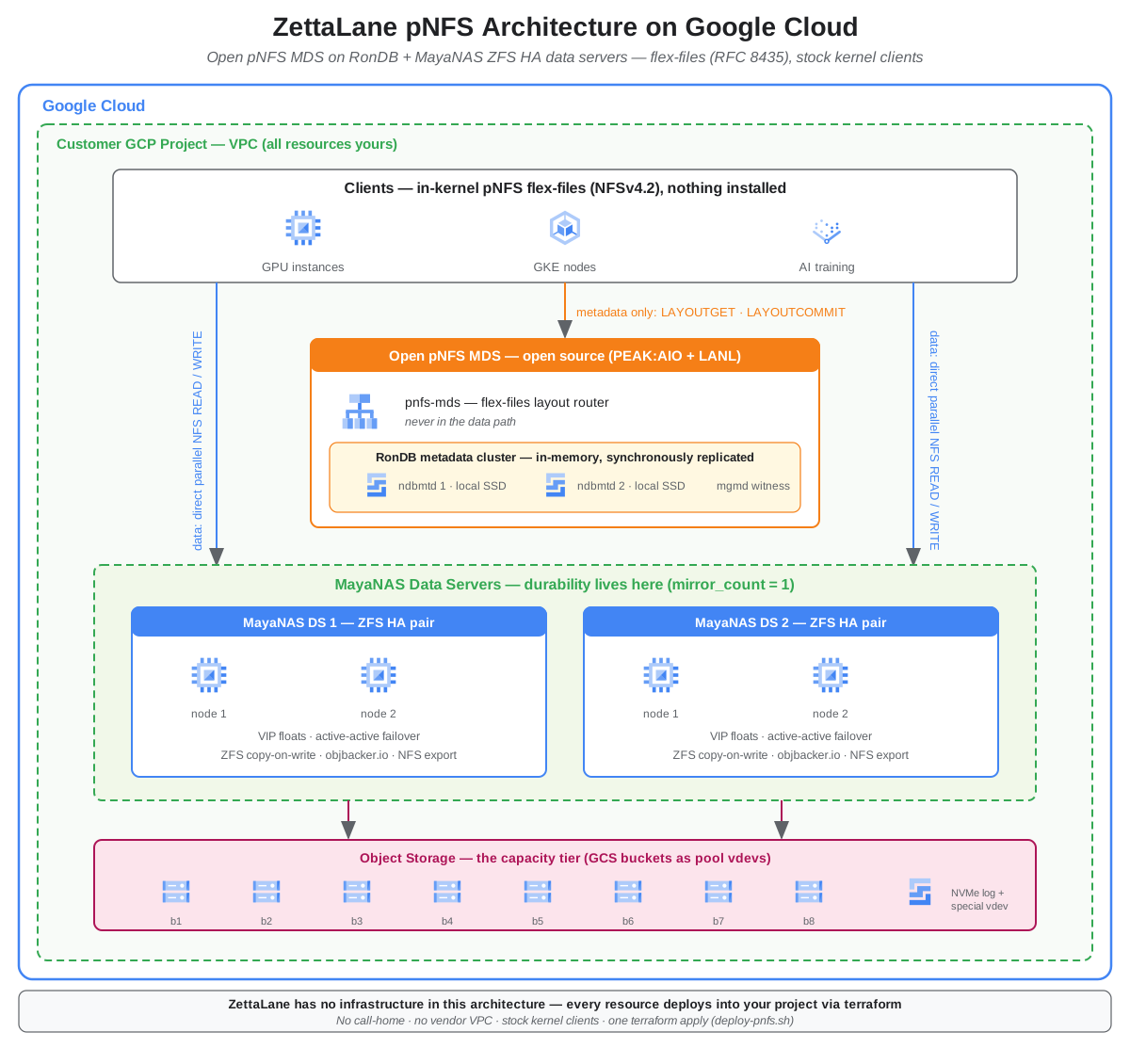
Open pNFS MDS on RonDB + MayaNAS ZFS HA data servers — the same shape deploys on AWS and Azure.
pNFS with flex-files layouts delivers parallel throughput using the NFS client already built into every Linux kernel — nothing to install on compute. An open-source metadata server routes the layouts, and MayaNAS nodes carry the data: durable, highly available, and backed by object storage.
The pNFS flex-files client (RFC 8435) ships in the mainline Linux kernel — GPU instances, managed Kubernetes nodes, and stock cloud images mount it like any NFS share. No agents, no kernel modules, nothing proprietary on compute.
The Open pNFS metadata server — open source, from PEAK:AIO and Los Alamos National Laboratory — hands each client a layout describing where its data lives. Metadata stays out of the data path; clients never funnel bytes through a head node.
Clients read and write directly to MayaNAS nodes in parallel. Each data server owns durability the way storage should — copy-on-write integrity, active-active availability, and object storage behind the capacity.
Open pNFS MDS on RonDB + MayaNAS ZFS HA data servers — the same shape deploys on AWS and Azure.
Parallel filesystems get complicated when the metadata layer also has to repair mirrors, track replica health, and manage tiers. With MayaNAS underneath, each data server already guarantees its own durability and availability — so the layouts stay simple, and there's nothing extra to license or operate above the storage.
Every client holds its own connections to every data server it needs — throughput scales with data servers, not with a gateway in the middle.
Data-server failures are handled by MayaNAS availability, silent corruption by copy-on-write checksums, and capacity by the object tier — the filesystem layers above stay thin.
Need more throughput? Add MayaNAS data servers and new layouts spread across them. The metadata router scales independently of the data.
The same MayaNAS nodes keep serving plain NFS and SMB alongside pNFS — one storage footprint for parallel training I/O and everyday file access.
IETF-standard protocol, in-kernel client, open-source metadata server, and data servers you deploy in your own account. No proprietary client stack anywhere in the path.
The metadata server, data servers, and client wiring come up from the same terraform repository as everything else — a complete pNFS environment in your project, ready to evaluate.
pNFS with MayaNAS data servers is a technology preview — the terraform modules stand up the full environment in your account for evaluation. Want a guided walkthrough? Talk to us.
Open standards above, MayaNAS durability below — deployed by terraform in your cloud.